
Growing diversity in schools: Challenges and practical responses
Diversity in schools brings educational variety, but also places substantial demands on teachers. Recent School Barometer data and a study by Susanne Enssen point to systemic responses.
Sina Schriewer3 min read

Differences in students' learning needs are a central issue in the current education debate. Although diversity is an educational goal, it often results in a heavy workload for school staff in practice. In a 2025 study (DOI: 10.1007/s35834-025-00523-3), Susanne Enssen examines how school leaders respond to these demands. Current data from the Deutsches Schulbarometer, a representative German school survey, underline the need for systemic solutions.
In Germany, education structures and staffing responsibilities differ across the federal states, so the practical response to these pressures varies by local system.
1. Sources of Pressure in Daily School Life
The June 2025 Deutsches Schulbarometer documents the challenges teachers currently face:
- Student behavior: Forty-two percent of teachers say student behavior is the greatest challenge in their professional work, up from 35 percent in the previous year.
- Workload: Eighty-three percent of respondents experience working with widely varying learning needs as a very substantial additional burden.
- Instructional quality: Fifty-five percent of teachers are concerned that pronounced diversity may reduce the quality of instruction.
These data suggest that providing individual support while managing large caseloads and differing needs is difficult without structural support.
2. Dimensions of diversity
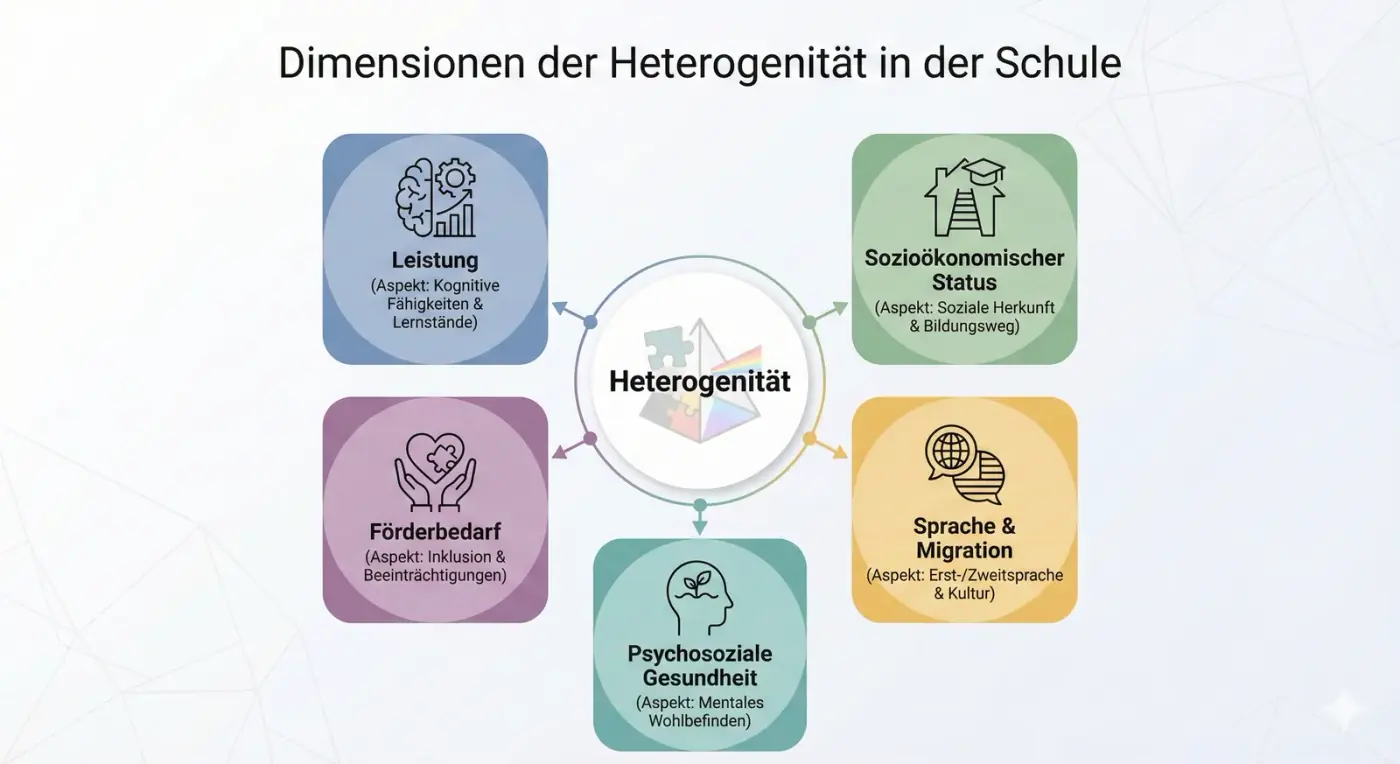
Diversity in schools is multidimensional. The academic literature, including work by Annedore Prengel and Katharina Walgenbach, describes several dimensions that shape a learning group:
- Achievement: Different cognitive abilities and levels of learning.
- Socioeconomic status: The influence of social background on educational pathways.
- Language and migration: First- and second-language acquisition as well as different cultural backgrounds.
- Special educational needs: Shared learning by children with and without disabilities.
- Psychosocial health: An increasingly relevant factor. According to the School Barometer, 43 percent of teachers see a strong need for professional development on supporting students experiencing mental health challenges.
When several of these characteristics intersect for an individual student, the complexity of educational work increases significantly.
3. Findings from Susanne Enssen's study
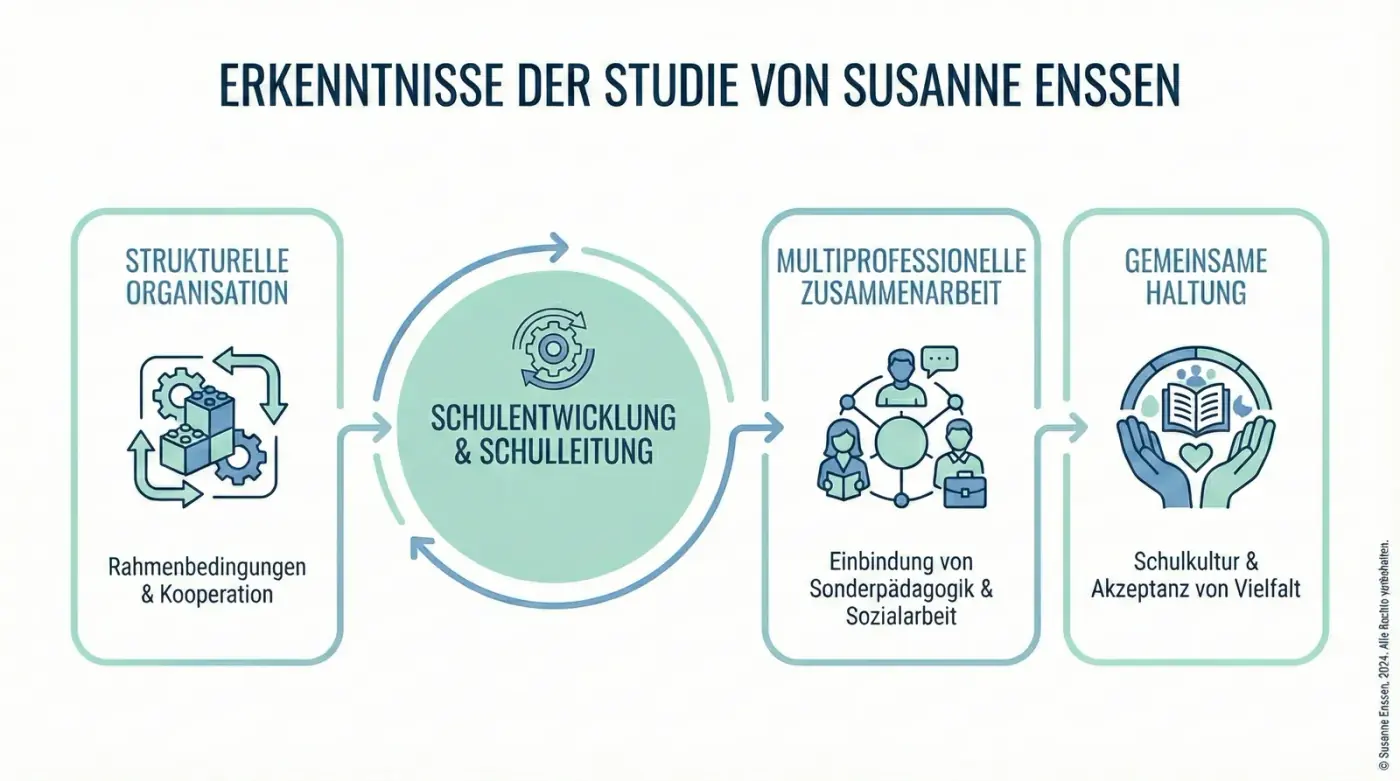
Susanne Enssen's study shows that responding to diversity is a central task of school development and school leadership. It identifies several important strategies used by school leaders:
- Structural organization: School leaders establish conditions that enable collaboration and clarify responsibilities.
- Multidisciplinary collaboration: Involving special education and school social work is described as necessary for reducing pressure on staff and supporting students.
- A shared mindset: Developing a school culture that accepts diversity as a structural reality is an important leadership goal.
Conclusion
Susanne Enssen's findings and the School Barometer data show that diversity requires professional coordination. Reducing pressure on teachers calls for systemic approaches, including a coordinated school leadership strategy, support for multidisciplinary teams, and resources that simplify administrative processes and create time for educational work.
References:
- Enssen, S. (2025): Wahrnehmung und Strategien von Schulleitungen im Umgang mit der Heterogenität ihrer Schülerinnen. Zeitschrift für Bildungsforschung.
- Robert Bosch Stiftung (2025): Das Deutsche Schulbarometer – Befragung von Lehrkräften.
- Prengel, A. (2019): Pädagogik der Vielfalt. Verschiedenheit und Gleichberechtigung in Interkultureller, Sonder- und Integrationspädagogik.
Related insights

Multidisciplinary Teams in Schools
Multidisciplinary teams in schools describe the systematic collaboration between teachers and other educational and social work professionals within the school.
Sina Schriewer10 min read

Data-Informed School Development: Who, If Not School Leaders?
Data can make school development effective — when school leaders treat it as a leadership instrument and get their teams to act together.
Norman Graf6 min read

Why Future-Ready Assessment Needs School Leadership
A future-ready assessment culture requires leadership, shared responsibility, and clear stages of development—not only new formats.
Norman Graf5 min read