
Multidisciplinary Teams in Schools
Multidisciplinary teams in schools describe the systematic collaboration between teachers and other educational and social work professionals within the school.
Sina Schriewer10 min read

Definition and significance
Multidisciplinary teams in schools describe the systematic collaboration between teachers and other educational and social work professionals within the school. In Germany, education policy and inclusion legislation are set by the individual federal states, which means both the composition of these teams and the frameworks governing them can vary considerably by region. In addition to classroom teachers, these teams may include special education teachers, school social workers, childcare educators (for example in extended-day provision), school support staff, or therapists. By bringing in different professions, the aim is to better address the diverse educational and support needs of the student body. For schools working inclusively in particular, multidisciplinary teams are considered a necessary component for the success of inclusion (Neumann et al. 2021).
The Standing Conference of the Ministers of Education and Cultural Affairs (KMK) already recommended the use of multidisciplinary teams in 2015 to respond to the diversity of learners. In recent years, collaboration between different professional groups has become increasingly established and is being promoted through education policy (KMK 2020). In Hamburg, for example, almost all schools now work in multidisciplinary teams, which receive dedicated training through the state institute (KMK 2015).
Reasons for their use
The growing diversity of the student body, combined with the expansion of extended-day provision and inclusive education, has significantly increased the need for multidisciplinary cooperation. Inclusion – reinforced since the ratification of the UN Convention on the Rights of Persons with Disabilities – means that students with different learning prerequisites are taught together, which places new demands on support systems (Neumann et al. 2021, p. 165). At the same time, the expansion of extended-day provision requires additional programs beyond classroom teaching – for example, leisure and support activities that are often delivered by educational staff outside the teaching profession. Multidisciplinary teams make it possible to tackle these challenges together by bringing different professional perspectives. A diverse team composition is seen as a benefit: different professions can jointly develop tailored support programs and thus contribute to school quality (University of Bielefeld 2021, pp. 1–2). Accordingly, in federal states such as Lower Saxony, collaboration in multidisciplinary teams has become "increasingly standard school practice" since the introduction of inclusive schooling (KMK 2020, p. 60).
Composition and role distribution
The specific composition of multidisciplinary school teams depends on the needs of the individual school. Typically, a core team consists of classroom teachers (general and, where applicable, vocational or special education teachers) and at least one additional profession, for example a school social worker or special education teacher. Depending on the school type and program, the team may also include childcare educators for extended-day provision, integration assistants or school aides for individual children with support needs, school psychologists, or other therapeutic professionals. Role distribution in such teams can vary: often the class teacher or subject teacher remains primarily responsible for instruction and assessment, while additional professionals take on supporting roles – for example, social education workers handling supervision and counseling, or special education teachers focusing on assessment, support, and co-teaching. Early empirical findings suggest, however, that traditional role patterns partly persist (Neumann et al. 2021). The task profiles of special education teachers, for instance, can differ considerably – ranging from intensive team teaching to more separate specialist support – and school social workers tend to concentrate mainly on working with parents and social work in the school context (Neumann et al. 2021). This division of tasks shows that, even within multidisciplinary teams, clear agreements are needed to ensure all professions can contribute their full potential and no important areas of responsibility are overlooked.
Opportunities and potential
Multidisciplinary teams offer great opportunities for school development and for the individual support of students. By pooling different areas of expertise, problems can be approached more holistically. Educational challenges – such as changes in academic performance, behavioral concerns, or social-emotional support needs – can be analyzed from multiple angles within the team in order to find tailored solutions. Accordingly, multidisciplinary teams are regarded in the research literature as a resource for inclusive schools (University of Bielefeld 2021). They are considered an important building block of an inclusive school culture, in which joint case discussions and mutual professional learning are part of everyday school life (University of Bielefeld 2021). International studies describe schools that successfully manage diversity as "Problem Solving Organizations" with a pronounced multidisciplinary culture of cooperation (Hoppey & McLeskey 2014, cited in Neumann et al. 2021). In other words, a trusting collaboration between different professional groups measurably contributes to school success and to better support for all children.
Practitioners confirm these positive effects: school leaders overwhelmingly rate the use of multidisciplinary teams as very helpful. In a nationwide survey, 86% of school leaders who did not (yet) have a multidisciplinary team at their school expressed a wish for such a team to support their staff (VBE 2020). At schools already working in teams with other professions, over 90% of school leaders report that these teams noticeably or at least somewhat reduce the workload of teachers (VBE 2022). This reduction in workload is evident, for example, in teachers being able to focus more on their teaching, while other professionals take complementary responsibility for social education matters, individual support plans, or parent counseling (cf. Wild 2022, p. 44). Multidisciplinary teams thus contribute to improving the quality of education and preventing overload through work intensification, by distributing tasks across more shoulders.
Challenges in collaboration
Despite their advantages, multidisciplinary teams face challenges in practical implementation. A frequently cited difficulty is the lack of fixed time slots for team communication in everyday school life. Studies show that in many schools, little or no regular time is set aside for coordination and joint planning (Wild 2022, p. 44). The different working hours and conditions of team members make coordination more difficult: in particular, professionals employed outside the traditional teaching staff (for example, social workers or part-time extended-day staff) often have fixed-term contracts or are only present in the school for certain hours. This leads to precarious employment conditions and sometimes to an unequal distribution of status and power within the team (Wild 2022). Teachers typically occupy a dominant position in the school hierarchy, while non-teaching professionals are often less involved in decision-making processes – an asymmetric cooperation structure that can make genuine teamwork more difficult (Wild 2022).
How information is passed across areas of responsibility is explored in the overview on handovers between school, extended-day provision, and youth welfare services.
A further problem can be unclear role boundaries. If it is not clear who is responsible for which tasks, there is a risk of misunderstandings or duplication of effort. The University of Bielefeld (2021, p. 2) explicitly warns that a blurring of roles and a one-sided shift of tasks within the team can lead to tensions. For example, without clear agreements, responsibility for supporting students with special needs could inadvertently be delegated entirely to special education teachers, rather than being shared collectively – which contradicts the idea of inclusive cooperation. In addition, professionals newly joining the team often need appropriate induction and guidance. Social education professionals or therapeutic staff bring valuable specialist knowledge, but are generally not trained for classroom instruction. Without a structured introduction to school procedures and pedagogical concepts, there is a risk that their potential will not be fully utilized or that they will work largely in isolation. According to the University of Bielefeld (2021), it is essential that additional, non-teaching staff are guided and continuously supported by teachers – but in practice, suitable concepts and resources for this are often lacking. When this support is absent, misunderstandings can arise and the quality of support can decline. Finally, school leadership is called upon to actively promote collaboration within the staff. Without backing and coordination from school leadership, multidisciplinary initiatives risk falling by the wayside or failing due to structural obstacles (University of Bielefeld 2021).
Conditions for success and outlook
For multidisciplinary teams to realize their full potential, certain enabling conditions must be met. A clear shared purpose is a central prerequisite: all those involved should have a common understanding of what their collaboration is aimed at (for example, the best possible support for every individual child). Building on this, there needs to be a clear division of tasks and regular communication. Studies and practical reports recommend fixed cooperation time slots in the timetable in which the team can exchange views and plan (Wild 2022). Such structurally embedded agreements create accountability and prevent collaboration from becoming merely ad hoc.
Equally important is equal-footing collaboration as peers. Each profession brings specific expertise – from the didactic and subject-matter competencies of teachers to the social education and psychological knowledge of other professionals. These areas of expertise should be co-constructively linked, meaning that all team members learn from one another and jointly develop pedagogical approaches (University of Bielefeld 2021, p. 2). Mutual appreciation and understanding of each other's professional roles foster this collaborative spirit. Joint professional development can help with this: in some projects (for example, BiFoKi – the Bielefeld training concept for inclusive cooperation), teachers and other professionals are trained together in order to improve teamwork and communication (Wild et al. 2020).
The posts on knowledge management for school teams and digital documentation in schools provide further detail on how shared knowledge can be systematically captured.
School leadership also plays a key role. It must create the organizational conditions – for example, by ensuring sufficient staffing and time resources and systematically integrating new team members. Experts emphasize that school leaders should actively model and promote teamwork (for example, through regular team meetings, clear communication structures, and recognition of team achievements). This sometimes requires a cultural shift in schools toward greater collaboration. In practice, however, examples from several federal states show that this shift is achievable: Brandenburg, for instance, has embedded the expansion of multidisciplinary teams in its education concept (Coalition Agreement 2019), and Hamburg is creating cross-school networks in which different professions exchange ideas.
Overall, it is clear that multidisciplinary teams are an essential element of modern school systems for doing justice to the diversity of the student body. Establishing them brings great opportunities for individual support and teaching relief, but also requires targeted support measures and a rethinking by all involved toward cooperative ways of working. Current research studies and practical reports underline that, given suitable conditions – time, resources, clear roles, and continuing professional development – multidisciplinary cooperation can make a substantial contribution to an inclusive and high-quality school (Wild 2022; Neumann et al. 2021). The outlook for schools therefore points toward a further professionalization of teamwork: multidisciplinary teams will increasingly become the norm, enabling the best possible educational opportunities for all children. Continuous research attention remains important to identify success factors and address challenges early on.
References
-
Standing Conference of the Ministers of Education and Cultural Affairs (KMK) (2020): Interim report on the implementation of the recommendation "Teacher Education for a School of Diversity." Resolution of the KMK of 10 December 2020. Available at: KMK-Online (accessed: 13 February 2025).
-
Neumann, P.; Grüter, S.; Eckel, L.; Lütje-Klose, B.; Wild, E. (2021): Tasks and responsibilities of general and special education teachers and school social work professionals in inclusive lower secondary schools – Initial findings from the BiFoKi project. In: Zeitschrift für Heilpädagogik, 72(4), pp. 164–177. Available on SSOAR.
-
University of Bielefeld (2021): Statement by the University of Bielefeld on the decrees "Joint Learning in Primary Schools" (Feb. 2021) and "Multidisciplinary Teams in Joint Learning at Secondary Schools" (May 2021). Bielefeld: BiSEd, 7 July 2021. Available at: University of Bielefeld.
-
Verband Bildung und Erziehung (VBE) (2020): School from the perspective of school leaders 2020. Forsa survey March 2020 – results report. Available at: VBE.de.
-
Verband Bildung und Erziehung (VBE) (2022): School from the perspective of school leaders – Wave 2022. Forsa survey November 2022 – results charts. Available at: VBE.de.
-
Wild, E. (2022): Effective cooperation in the multidisciplinary team and in school-based parent engagement – two interdependent quality characteristics of inclusive schools. In: B. Serke & B. Streese (eds.), Pathways of Cooperation in the Context of Inclusive Education. Bad Heilbrunn: Klinkhardt, pp. 43–51. Open Access via peDOCS.
Related insights
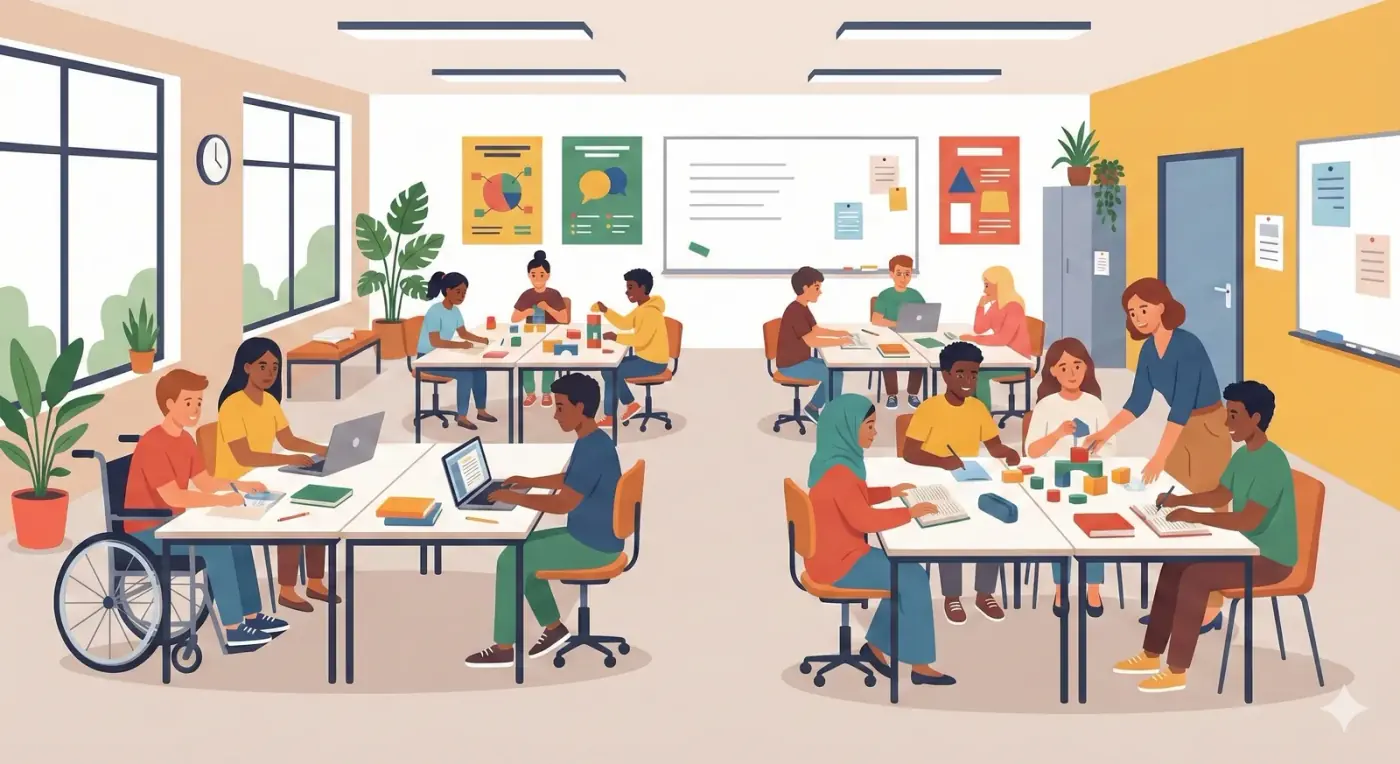
Growing diversity in schools: Challenges and practical responses
Diversity in schools brings educational variety, but also places substantial demands on teachers. Recent School Barometer data and a study by Susanne Enssen point to systemic responses.
Sina Schriewer3 min read
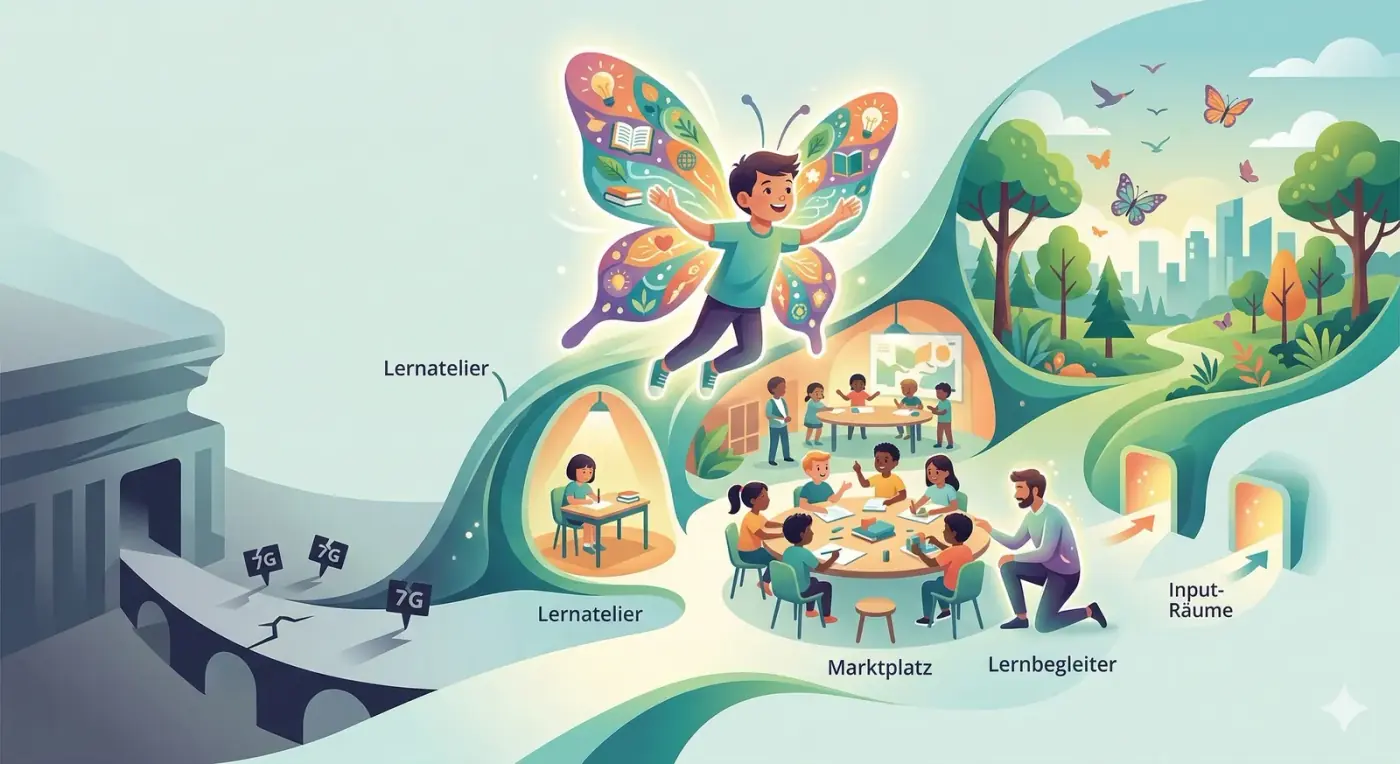
Rethinking school: The wingbeat of Butterfly Pedagogy
Stefan Ruppaner and the Alemannenschule Wutöschingen show how self-directed learning can work. Butterfly Pedagogy breaks open the rigid 7G model and makes children active participants in learning.
Sina Schriewer4 min read

Why Future-Ready Assessment Needs School Leadership
A future-ready assessment culture requires leadership, shared responsibility, and clear stages of development—not only new formats.
Norman Graf5 min read