
Educational Opportunity in Germany Still Depends on Background
Social background still determines children's educational paths in Germany. A study by the Leibniz Institute for Educational Trajectories shows how educational inequality develops — and identifies three levers we need to move now.
Sina Schriewer4 min read
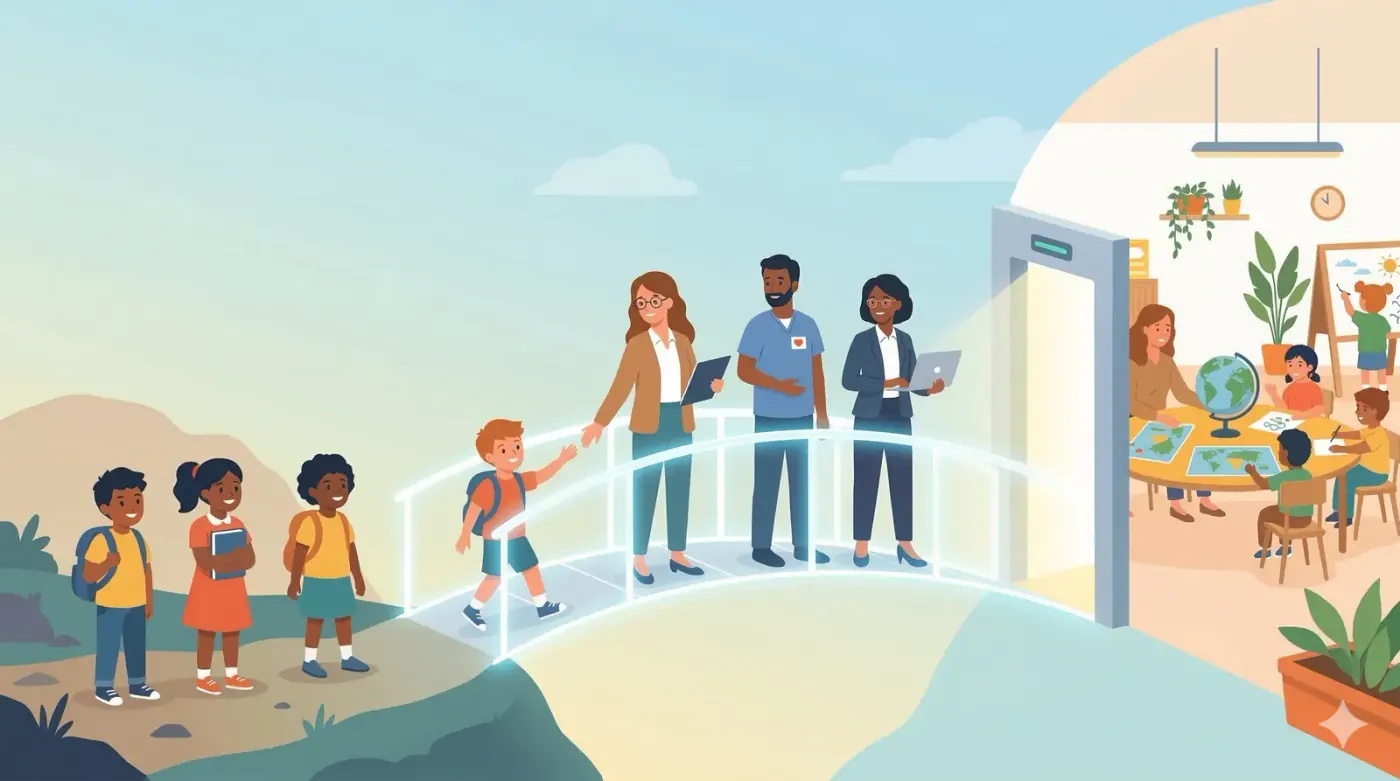
In Germany, education policy is largely the responsibility of the individual federal states; that state-specific system shapes the funding, transitions, and support structures discussed below.
A look at the German education system reveals an uncomfortable truth: a child's social background continues to have a decisive influence on their educational trajectory.
A comprehensive study by the Leibniz Institute for Educational Trajectories (LIfBi), titled From Kindergarten to University, provides compelling evidence for this. By analyzing longitudinal data from the National Education Panel Study (NEPS), the research shows how educational inequalities develop and become entrenched across every critical stage of life. The sobering finding: there is a vast gap between the politically desired goal of equal opportunity and the actual empirical reality in Germany.
But how can we close this gap? If we know where and how social background shapes educational success, which levers do we need to pull? Various academic and political institutions have developed concrete recommendations for action.
Here is an overview of the three most important solutions:
1. Treating unequal situations unequally: needs-based school funding
A central approach is to move away from the existing "watering-can principle" of uniform resource distribution. Schools in socially disadvantaged areas, or with a high proportion of students from migration backgrounds, face far greater pedagogical challenges and therefore need more targeted funding and staff.
An important instrument for this is the "Sozialindex" (social deprivation index), as applied in schools participating in the Startchancen program. This index aggregates data on social disadvantage at a given school location — such as the local unemployment rate — and allows school authorities to direct additional funding and teachers systematically to where the educational need is greatest.
2. Schools as Networks for Multidisciplinary Teams
To support students as comprehensively and individually as possible, it is no longer enough to rely on teachers alone. Schools need to develop into strong networks and increasingly deploy multidisciplinary teams.
When educators, social workers, school psychologists, health advisors, and IT specialists are closely integrated into the school day and collaborate seamlessly, the individual circumstances of children can be taken into account much more comprehensively. Such broadly structured teams create central points of contact within the school, absorb peaks in demand, and provide noticeable relief to families in precarious situations.
3. Fair transitions and socially mixed classrooms
A further key lever is the reform of school transitions — for example, from German elementary school (Grundschule) to a subsequent secondary school. To date, transition recommendations are often based on assessments that can unconsciously disadvantage students from low-education backgrounds.
More objective assessment methods could reduce this unequal treatment. Experts also emphasize the importance of creating socially heterogeneous learning groups. Since strong social segregation in schools has negative effects on children who are already disadvantaged, such children benefit considerably from learning alongside higher-achieving peers.
Conclusion
The problem of educational inequality is plain to see. Fortunately, solutions exist: through intelligent, needs-based funding, a school culture supported by strong multidisciplinary teams, and fairer structures for school transitions, it is possible to decouple long-term educational success from social background.
Sources & further reading:
- Leibniz Institute for Educational Trajectories (LIfBi): Gleiche Leistung, ungleiche Chancen (Equal Achievement, Unequal Opportunity). Study for the first time comprehensively shows how social background shapes educational inequality from kindergarten to university. (Foundation for understanding how educational inequality arises.)
- Expert Council on Integration and Migration (Sachverständigenrat für Integration und Migration, SVR): Ungleiches ungleich behandeln! Wege zu einer bedarfsorientierten Schulfinanzierung (Treating Unequal Situations Unequally! Pathways to Needs-Based School Funding). (Recommendations on the social deprivation index and targeted resource allocation.)
- Institut der deutschen Wirtschaft (IW): Bildungspolitische Impulse für mehr Chancengleichheit an Schulen (Education Policy Impulses for Greater Equal Opportunity in Schools). (Recommendations on expanding support infrastructure and deploying multidisciplinary teams.)
- Aicademix: Chancengleichheit im Bildungssystem: Soziale Herkunft und ihre Auswirkungen auf den Bildungserfolg (Equal Opportunity in the Education System: Social Background and Its Effects on Educational Success). (Summary of recommendations on transition assessments and social segregation.)
Related insights
Educational Opportunity Begins With Measurable Early-Childhood Quality
Current data shows that play and learning are not opposites. But to address educational disadvantages early, Kitas need clear standards and assessment integrated into everyday routines.
Sina Schriewer4 min read

Schools and Youth Centers Against Educational Inequality
Schools and open child and youth services can address educational inequality together by connecting places to learn, trusted relationships, and practical support.
Sina Schriewer4 min read

Why School Collaboration Beats Solo Work
Why genuinely structured teamwork – including multidisciplinary collaboration – contributes to workload relief and improves the quality of education.
Björn Schriewer8 min read