
Strong Education Networks Improve Education Together
Guest contribution by Georg Babing (edusiia): why exchange and strong networks are so important for education professionals – and how edusiia as a digital network helps.
Georg Babing3 min read
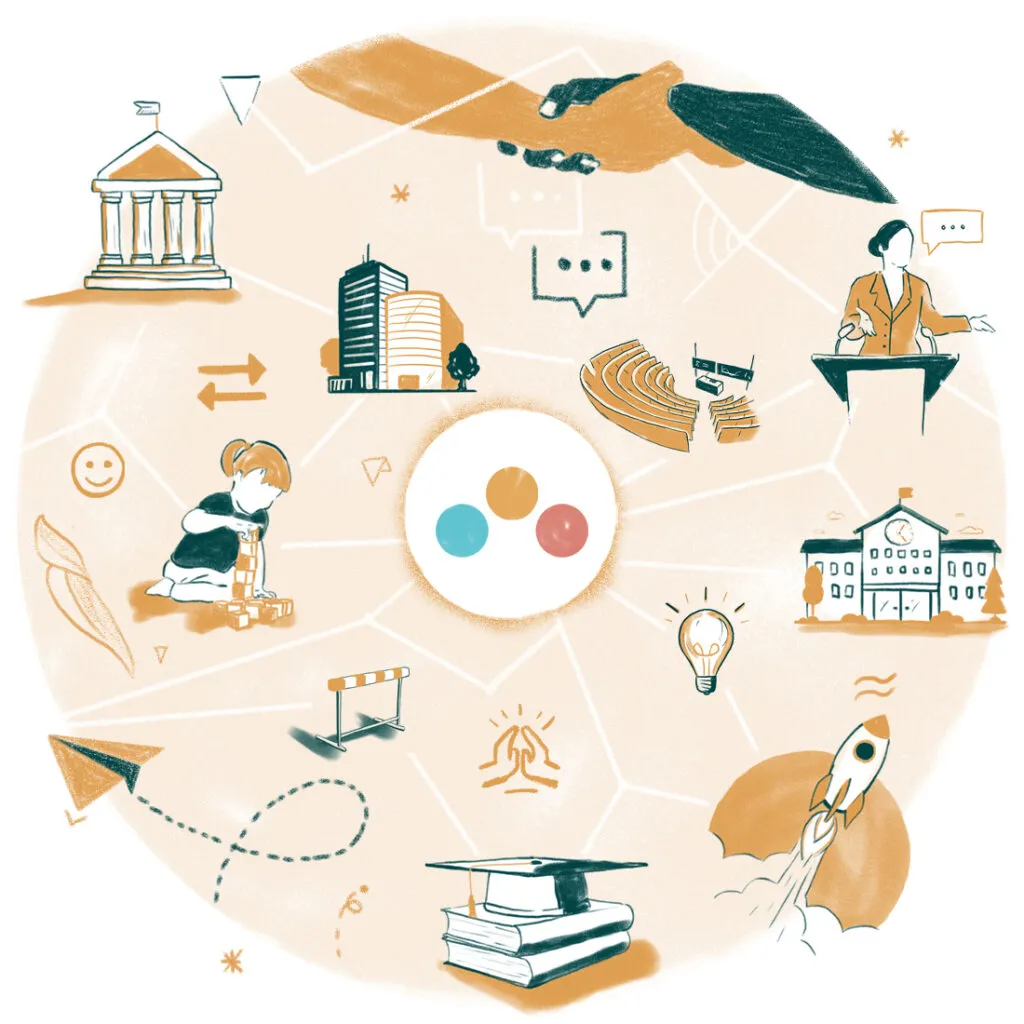
Improving Education Together: Why Strong Networks Are Indispensable in Education
A guest contribution by Georg Babing, co-founder of edusiia
Whether early childhood education, school, or extracurricular programs – the demands on education professionals have grown steadily in recent years. Staff shortages, social inequalities, digitization, mental health, inclusion: education has long since become a cross-cutting social challenge. At the same time, many professionals feel left to cope on their own in their daily work. Time is short, resources are scarce – and often so is the chance to exchange ideas with others who have long since developed or tried out good solutions.
And yet, that exchange is precisely the key: because many problems are complex, but not new. We notice time and again at events and in conversations with other education professionals: there are already stimulating and promising approaches to many of the small and large challenges. But without functioning networks, these experiences remain isolated. Every challenge becomes an individual burden and progress is painfully slow.
What strong networks can achieve
We want to change that. We are convinced: strong networks can create spaces for solution-oriented thinking, for constructive cooperation – and sometimes for an empathetic moment of connection, so that people realize: I am not alone with this challenge. Anyone who regularly exchanges ideas with other professionals, organizations, and experts benefits at multiple levels:
- Knowledge is shared and you learn from others.
- Experiences become visible rather than being overlooked.
- Resources can be deployed more purposefully.
- Time is saved – a rare commodity for many in education!
Networks make good practice transferable – and education more efficient and more equitable as a result. Particularly in a system where scope is narrow and tasks are great, that is of immeasurable value.
What networks need to function
Good networks don't emerge by chance. They need structure, moderation – and a culture of openness. Because networking does not simply mean having many contacts. What counts is the quality of relationships. Trust, reliability, a shared commitment to collaboration: these are the real foundations.
The right infrastructure matters too. This means in-person formats – such as conferences, professional days, or peer circles – but also digital ones. Supra-regional or interdisciplinary networks in particular benefit when exchange can happen without barriers, asynchronously, regardless of location and time.
An example: edusiia – the social network for education
It was precisely with this idea that we founded edusiia – a digital network for everyone working in the field of education. Our goal was and is to create a space where education professionals can connect easily: across disciplinary boundaries, between organizations, and simply from person to person.
More than 1,000 individuals and institutions now use edusiia, including schools, foundations, NGOs, companies, and other education actors. They connect over joint projects, seek feedback, organize events, or exchange experiences on current challenges – such as multidisciplinary collaboration, digital learning, or specific topics like the Startchancen-Programm (a German federal school improvement initiative).
We built edusiia from the start to be tailored to the needs of education professionals and organizations. And because we want to enable as many actors from this field as possible to participate, our network is now completely free – you can register directly at no cost and get started straight away.
Networks as a catalyst – not a substitute
Of course, networks alone cannot solve the structural problems in the education system. Good education needs political reform, better funding, and sustainable strategies. But networks can be a catalyst: for change from the ground up, for shared solutions, for greater impact in everyday practice. They can build bridges between those who often work side by side rather than together.
More than that: networks can also instill hope. They show that no one has to fight alone. That commitment can be shared. That change is possible – when we come together and improve education jointly.
Related insights

Guest Contribution: Communication Strengthens School Collaboration
Guest contribution by André Kolley: find out through three concrete examples how Kipti can practically solve the most common problems in school communication, documentation, and language accessibility – and thereby significantly ease everyday school life.
André Kolley6 min read

How AI Can Support Everyday School Life
The integration of AI in the school environment is gaining in importance. Find out what support potential AI offers and what challenges need to be considered.
Sina Schriewer10 min read

AI in Schools 2026: Better Models, Better Education?
New AI models are growing more capable, but better education only emerges through clear frameworks, pedagogical responsibility, and the right deployment scenarios.
Björn Schriewer7 min read