
School Barometer 2026: Youth Mental Health Concerns Everyone
The 2026 School Barometer reports alarming levels of distress among young people. Schools need protective factors, participation, and health literacy.
Sina Schriewer5 min read
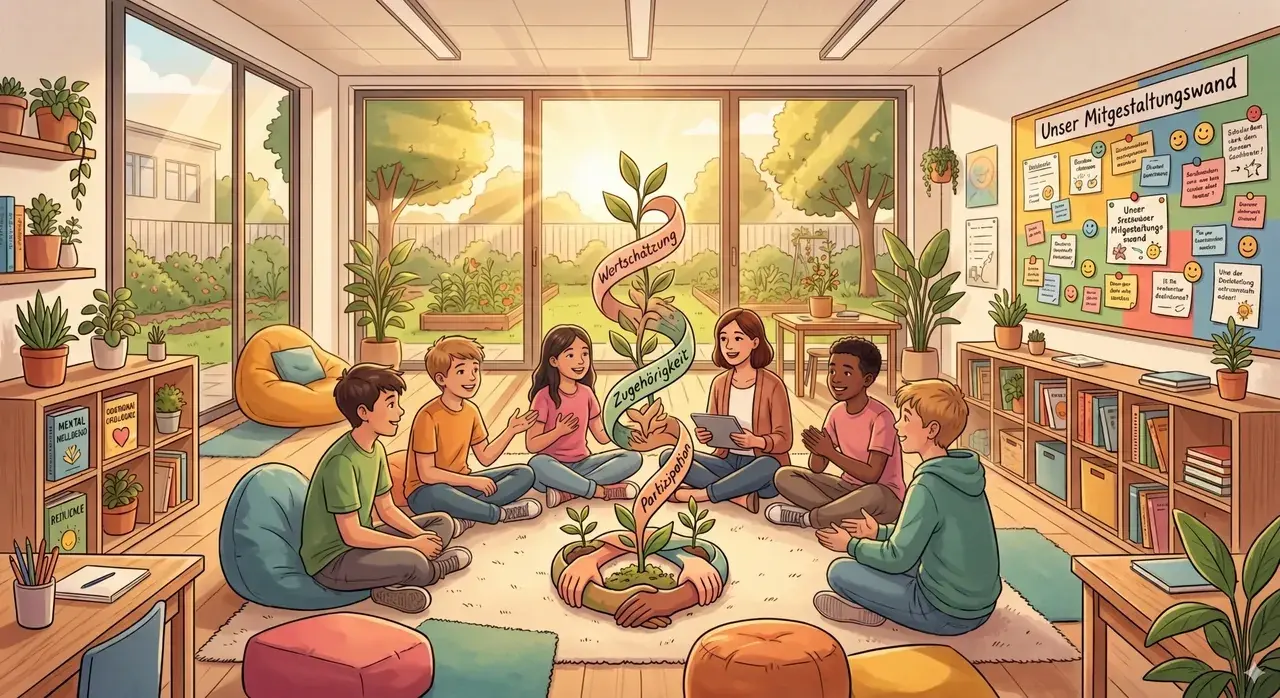
The latest surveys of child and adolescent mental health in Germany present a troubling picture that calls for action across society. Data from major nationwide studies and analyses are clear: distress is widespread, and young people also have specific ideas about what needs to change.
In Germany, schools work within federal-state education systems while school psychology and social-work provision vary locally, so these national findings translate into different regional responses.
Psychological distress at record levels—with far-reaching consequences
Psychological distress remains alarmingly high. About one quarter of all 8- to 17-year-olds show signs of high psychological distress. Fifteen percent display clear mental health concerns, while another 10 percent fall within a concerning borderline range. At the same time, 26 percent of young people report a low quality of life. Children from very low-income families and students with special educational needs are particularly affected. Family conflict, parental mental illness, and excessive media use are identified as central risk factors.
This trend is not only an individual tragedy; it also has serious economic consequences. Mental illness is a significant risk factor for school absence: absence rates among affected children are almost three times as high as among healthy children. Psychological distress also substantially increases the later risk of leaving school or vocational training early. Investment in youth mental health, including prevention programs, can therefore be highly worthwhile from an economy-wide perspective.
Feeling powerless and wanting health literacy
Many young people feel powerless in everyday life and often feel that adults do not take them seriously. A striking 40 percent speak to no one when they are struggling. They identify long waiting times, social stigma, a lack of courage, and fear of not being understood as the greatest barriers to seeking help.
At the same time, demand for information is enormous. Eighty-two percent of young people want to learn more about mental health, especially how to manage stress, regulate emotions, and build confidence. They look primarily to schools: two thirds want the topic addressed in class, but only 24 percent say that this currently happens. Studies also show an association between strong health literacy, better well-being, and fewer psychosomatic complaints.
What supports good instruction and well-being at school
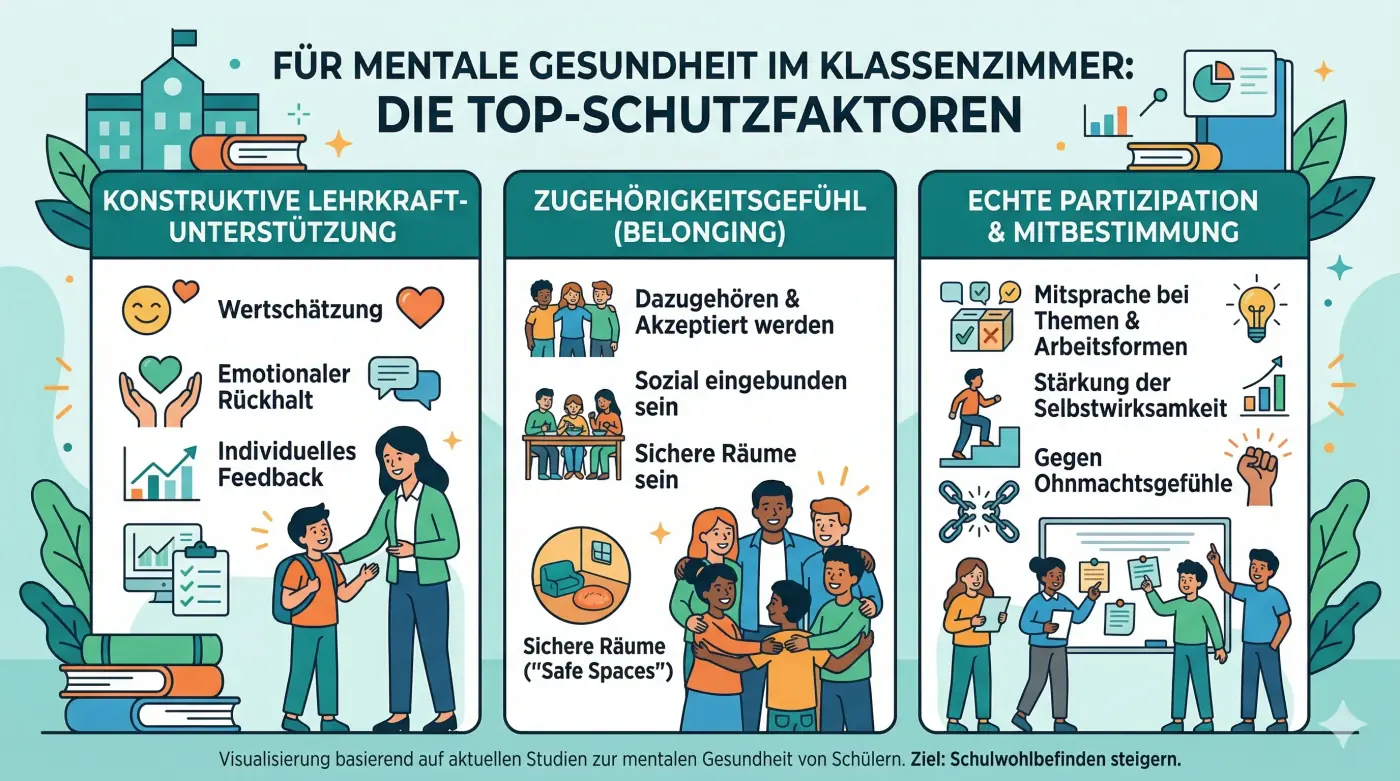
The school environment is an important protective factor. Constructive teacher support is by far the strongest reported influence on classroom well-being. Appreciation, emotional support, and individual feedback have a highly positive effect. Belonging—the feeling of being included, socially connected, and accepted—is an essential factor in mental well-being for 81 percent of young people. Conversely, constant overload or chronic boredom has a strongly negative effect.
Participation as a path to agency
Young people do not only want to consume; they want to help shape their environment. At present, however, they rate their opportunities to participate in school decisions as very limited. Around three quarters want substantially more say, whether in selecting classroom topics, choosing working methods, or determining forms of assessment. Research finds a direct association between more genuine participation, greater well-being at school, and better quality of life. Participation strengthens agency and counters the paralyzing feeling of powerlessness.
Bullying as a constant presence
Bullying and cyberbullying remain major problems. Thirty percent of 11- to 17-year-olds report experiencing targeted negative behavior from peers at least monthly during the current school year. These experiences damage belonging and are closely associated with mental health concerns and low well-being at school.
Conclusion: What needs to happen now
Schools today need to develop into healthy living environments and genuine places of social development. That requires concrete measures:
- Relationships as a core responsibility: Appreciation, constructive support, and individual feedback from teachers cannot be treated as optional extras. They are a foundation for well-being at school.
- A stronger sense of belonging: Feeling socially connected and accepted is essential to mental health. Schools should deliberately create spaces of belonging and foster respectful interaction.
- Genuine participation: Children and adolescents need to be involved in school decisions to strengthen their agency and counter feelings of powerlessness.
- Broad access to information: Mental health and health literacy need a clear place in curricula and must be discussed without stigma.
- Expanded support infrastructure: Schools need more school social workers and school psychologists as consistent, trusted, and visible points of contact on site.
Only by listening to young people, supporting them with respect, and giving them spaces in which they can belong and grow in good health can society lay the foundations for a strong and resilient future.
References
- Robert Bosch Stiftung (2026): Deutsches Schulbarometer: Befragung Schüler:innen 2025/26. Ergebnisse von 8- bis 17-Jährigen und ihren Erziehungsberechtigten zu Wohlbefinden, Unterrichtsqualität, Partizipationsmöglichkeiten und (Cyber-)Mobbing.
- YEP - Stimme der Jugend (2025): Mental Health Jugendbericht. (Partizipative Studie mit Heranwachsenden aus Deutschland und Österreich).
- IFT-Nord / DAK-Gesundheit (2025): Gesundheit und Gesundheitsverhalten von Kindern und Jugendlichen in Deutschland – Ausgewählte Ergebnisse des Präventionsradars 2024/2025. (Autor:innen: Hansen, J., Neumann, C. & Hanewinkel, R.).
- Institut der deutschen Wirtschaft Köln e. V. (2025): Die ökonomische Bedeutung der psychischen Gesundheit von Schülerinnen und Schülern. (Autor:innen: Dr. Christina Anger, Julia Betz, Dr. Wido Geis-Thöne).
- Springer Medizin / Präv Gesundheitsf (2022): Unterrichtsprogramm zur Förderung von Mental Health Literacy. Bewertung der Intervention durch Schüler:innen. (Autor:innen: Sandra Kirchhoff, Alexandra Maria Freţian, Tessa Schulenkorf, Torsten Michael Bollweg, Ullrich Bauer).
Related insights

Schools and Youth Centers Against Educational Inequality
Schools and open child and youth services can address educational inequality together by connecting places to learn, trusted relationships, and practical support.
Sina Schriewer4 min read
Growing diversity in schools: Challenges and practical responses
Diversity in schools brings educational variety, but also places substantial demands on teachers. Recent School Barometer data and a study by Susanne Enssen point to systemic responses.
Sina Schriewer3 min read
Mental Health in Schools: A Look at Practice
Mental health burdens in everyday school life are real – for students as much as for teachers. Current data highlight the challenges and how schools can respond.
Sina Schriewer2 min read