Project-based learning: Turning ideas into real impact
Project-based learning connects real problems with short work cycles, clear feedback, and genuine participation. This turns an idea into a school project that can be implemented.
Björn Schriewer7 min read
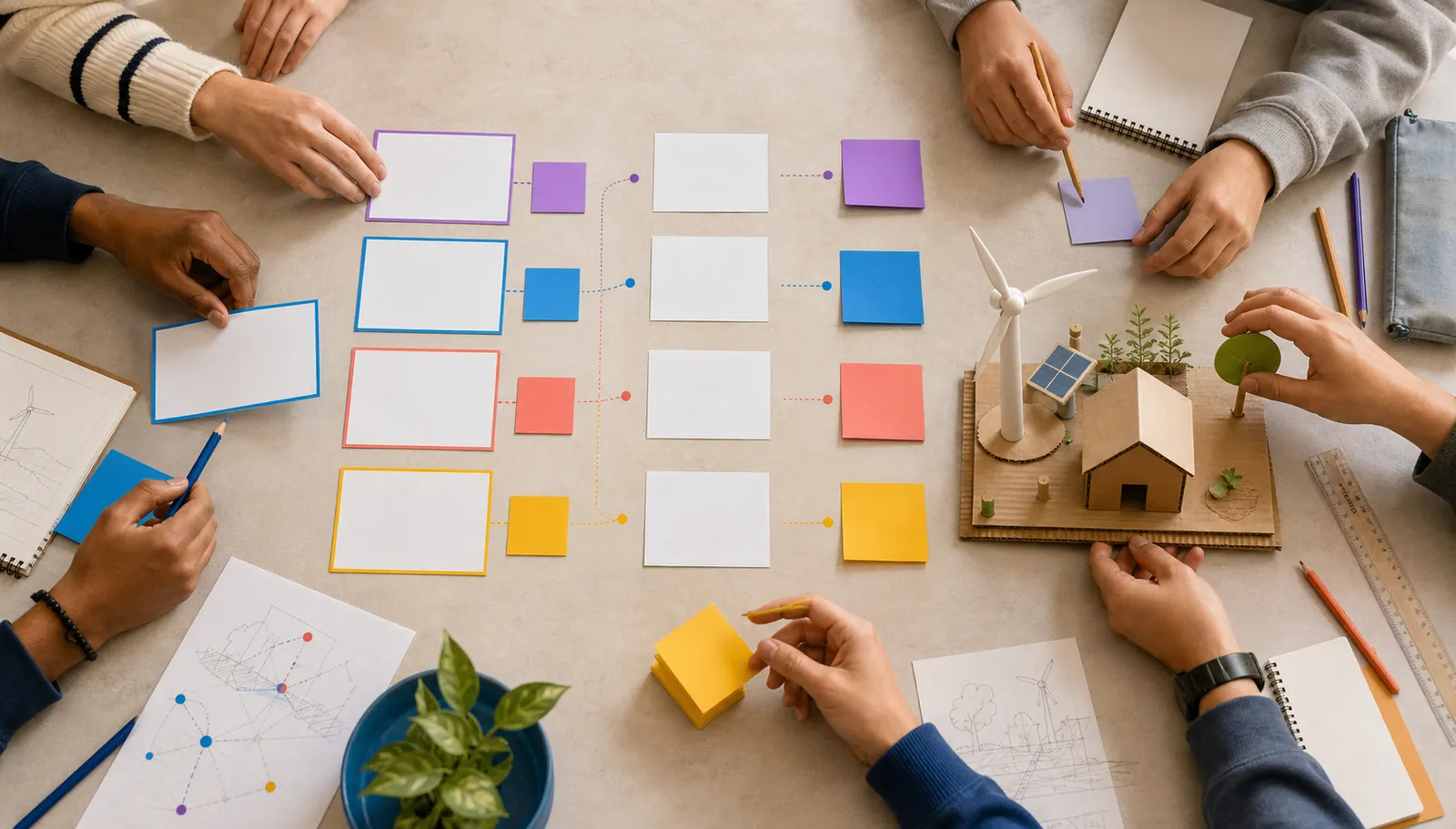
The most important question in a school project is not What should students submit? A better question is What should be different afterward?
In episode LdN488 of Lage der Nation, teacher and deputy chair of Teachers for Future Germany Inga Feuser explains why learning should more often begin with real questions. Addressing a problem in one's own community requires subject knowledge, planning, collaboration, and the experience of being able to make a difference.
In Germany, education frameworks are set by the federal states, while the KMK coordinates recommendations across those systems.
A simple work cycle can turn that idea into a practical project: clarify the intended impact, plan the next steps, gather experience, and improve the plan together.
From the classroom to the cafeteria
Inga Feuser uses a school cafeteria to show how quickly classroom learning and everyday school life can drift apart. In class, students examine the social, environmental, and ethical consequences of meat consumption. Soon afterward, they stand at their school's lunch counter choosing between two meat dishes and an unappealing vegetarian alternative.
The obvious response would be simply to recommend that students eat less meat. Feuser goes a step further. She encourages them to question not only their own behavior, but also the conditions at their school. Why does the menu look this way? Who decides what is offered? And whom could they approach about a change?
Those questions can become a concrete project. Students could speak with the caterer about better vegetarian dishes and fewer meat or fish options. In doing so, they apply knowledge, take shared responsibility, and experience that they can make a real difference at their school.
What strong project work requires
The idea of improving cafeteria food is easy to state. For students to take action and keep the project from ending after the first conversation, five elements are needed:
- A real problem: Learners address a concrete issue from everyday school life, such as how the cafeteria's offerings could be improved.
- Genuine participation: Students make meaningful decisions instead of merely following a prescribed sequence.
- Reliable time: The project has a fixed place in the timetable and runs long enough to process setbacks and new insights.
- Support as needed: Teachers provide direction, feedback, and different levels of support without deciding every step in advance.
- Differentiated feedback: The final product is not the only consideration. Planning, collaboration, communication, and responses to problems are also discussed.
These points come from more than the podcast. The KMK recommendation on education for sustainable development emphasizes real-life relevance, self-direction, participation, and projects with partners beyond school. The OECD identifies a challenging question, sustained inquiry, authenticity, student choice, reflection, critique, and revision among the characteristics of high-quality project-based learning.
The FREI DAY learning format applies this idea especially consistently: at least four consecutive hours each week for questions about the future chosen by students. Its quality criteria add a shared daily structure, interim presentations, reflection conversations, and regular retrospectives within the organizing team. Freedom and structure explicitly belong together.
Agile does not mean unplanned
Companies and other organizations have long used methods for complex projects that do not try to specify every detail on day one. Scrum is a familiar example. The official Scrum Guide describes three core ideas: make work transparent, inspect results regularly, and adapt the next steps to new findings.
Schools do not need to adopt corporate language or copy Scrum in full. Its central idea is useful: a team works in short, manageable stages. After each stage, it reviews the result, gathers feedback, and improves the plan. The school-oriented adaptation eduScrum demonstrates one possible division of roles. The teacher establishes and explains the learning framework, supports the process, and advises; learners organize their route through the work within that framework.
For school-development teams, the Baden-Württemberg Ministry of Education also recommends combining traditional and agile elements to fit the project and school culture. Its guidance names measurable goals, clear work packages, visible responsibilities, regular coordination, and Kanban boards. This describes a practical way of working for school teams; it does not by itself establish the effectiveness of any instructional method.
The OECD likewise describes learning as a recurring cycle of anticipation, action, and reflection. In this AAR cycle, learners plan with possible consequences in mind, act responsibly, and use reflection to inform the next attempt. In school, an agile approach is therefore primarily a learning loop rather than a rigid package of methods.
The project cycle at a glance
Six steps provide a dependable rhythm:
Clarify impact → plan a stage → act → show interim progress → adapt the plan → reflect on impact
Depending on the project, steps two through five repeat several times. A long to-do list becomes a manageable learning loop.
| Step | Guiding question | Visible result |
|---|---|---|
| 1. Clarify impact | Which real problem are we addressing, for whom, and how will we recognize progress? | An impact question and a verifiable goal |
| 2. Plan a stage | What matters now, who takes responsibility, and by when? | A small set of prioritized tasks with owners and deadlines |
| 3. Act and preserve knowledge | What are we learning, what are we deciding, and whom are we involving? | Sources, findings from conversations, and brief decision notes |
| 4. Show interim progress | What is already working, and where do we need feedback? | A small partial result and specific feedback |
| 5. Adapt the plan | What are we learning from the feedback, and what changes next? | Updated tasks, priorities, and the next stage |
| 6. Reflect on impact | What did we change, and how do we want to collaborate in the future? | A documented result and a brief retrospective |
Applied to the cafeteria project, the group describes the contradiction between classroom content and the available food, defines an attainable goal, and prepares for a conversation with the caterer. Afterward, it records which changes are possible and which questions remain open. In the next stage, the group makes its proposal more concrete, seeks feedback, and adapts the plan.
The overview can remain simple: open, in progress, done. Add one responsible person, the next date, and one place for insights and decisions. That is often enough project management to begin.
How Kipti supports the school team
While students work on the cafeteria project, the teacher supports not only the result, but also the learning process. How does the group distribute roles? Who takes responsibility? Where does a student still need direction? What support should be available in the next sprint?
Teachers record observations like these in Kipti in their own words. For example: “The group planned its first sprint independently. Facilitation is already working well; the group still needs support distributing research tasks.” The note can be associated with the relevant students or group, filed under the “cafeteria project” keyword, and shared with other colleagues supporting the work. It can also be captured as a voice note while away from a desk. Across several project sessions, this creates a traceable picture of how collaboration, independence, and responsibility develop.
The educational team can also use task management in Kipti to work in short cycles. At the beginning of the project, it might create the task “Introduce Scrum principles and the structure of a sprint.” Before the next review, another task might be “Discuss milestones with the learning group.” Each task can include a short description, due date, and the status open or complete. This keeps the team's next support steps visible while responsibilities and decisions about content remain matters for the team to clarify together.
Kipti is a workspace for teachers and school teams. It is not a learning platform for students and does not replace professional educational decisions.
Learn more on the Kipti features page, in task management for teachers, and in our article on personal knowledge management in everyday school life.
A realistic starting point
A school does not need to rebuild its entire timetable immediately. Three binding decisions are enough for an initial cycle:
- A concrete project: a relevant problem with an attainable first impact.
- A regular time slot: the same time every week, long enough for genuine project work.
- A shared documentation routine: update tasks, record insights, and define the next step.
After four work cycles, the team takes stock. Did students make genuine decisions? Was progress visible? Where did they need more direction, and where more autonomy? The answers inform the next, better version of the project.
Both sides can work in an agile way. Students review their results and adapt their next steps. The teachers supporting them also consider regularly which support is effective, which tasks remain, and what they want to change in the next work cycle. The plan does not need to be perfect from the beginning—for the learning group or for the team supporting it.
Sources and further reading
- Lage der Nation, LdN488: Climate, democracy, and schools
- Lage der Nation: Official transcript for LdN488
- FREI DAY: What is FREI DAY?
- FREI DAY: Quality criteria
- KMK: Education for sustainable development in schools
- OECD: Project-based learning for soft skill development
- OECD: Anticipation-Action-Reflection Cycle for 2030
- Baden-Württemberg Ministry of Education: Project management in vocational schools
- Scrum Guides: The Scrum Guide in German
- eduScrum: What is eduScrum?
Related insights
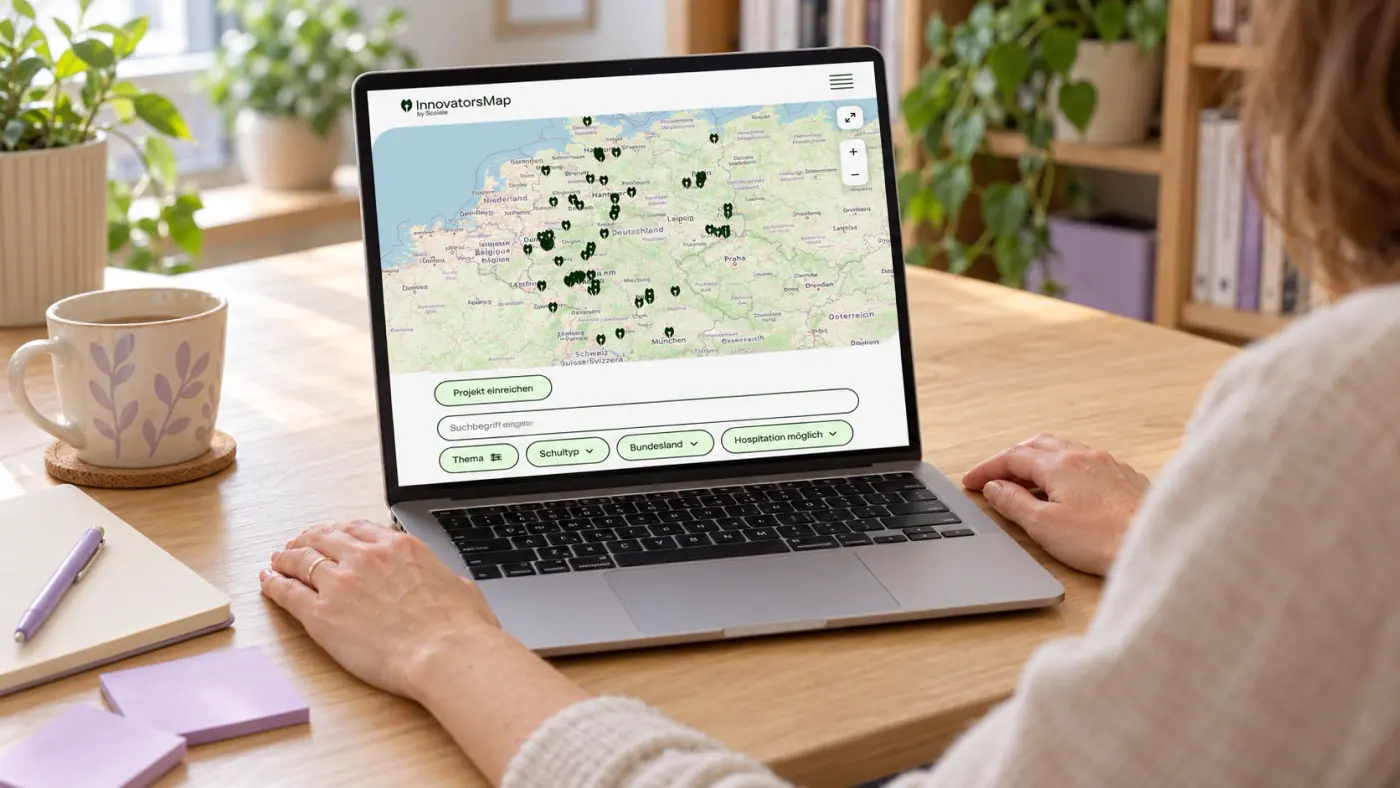
Learning together: School development and projects with Scolaia
A closer look at Scolaia’s InnovatorsMap, school visits, and AI prompt generator.
Sina Schriewer2 min read

Schools under pressure: Studies on workload and AI
Three studies explore the pressures schools face and how collaboration, clear processes, and AI may help reduce their workload.
Sina Schriewer6 min read

Needs compass: Finding solutions for your school
Clarify your needs before choosing a tool. Four questions help your school team identify which solution fits your everyday work.
Sina Schriewer5 min read