
Violence Prevention in Schools: Acting Early
Violence prevention starts long before an incident occurs. Schools need clear responsibilities, reliable communication channels, and jointly owned protection concepts.
Sina Schriewer7 min read
In Germany, school safety policies and violence prevention requirements are set by individual federal states; this article draws on frameworks from the KMK (Standing Conference of the Ministers of Education and Cultural Affairs) and a 2026 decree from the state of Lower Saxony.
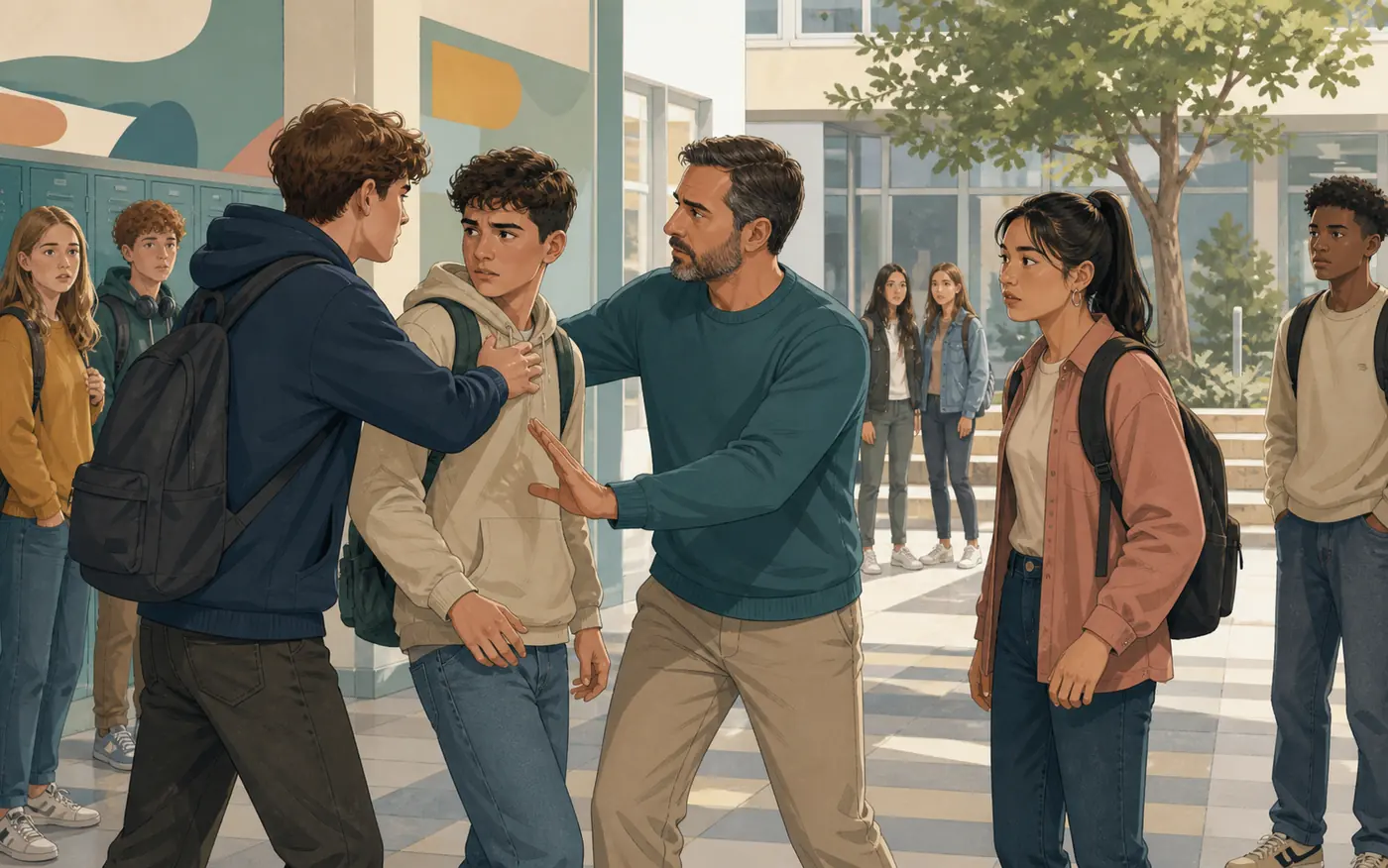
Violence in schools does not begin only when physical altercations occur. Insults, threats, exclusion, bullying, cyberbullying, and sexual violence all form part of the picture. And it is frequently not isolated incidents but developments over an extended period that become a burden for students, teachers, and other staff.
For schools, the question is therefore not only how to respond to a specific incident of violence. At least as important is how violence can be recognized and prevented as early as possible.
Violence prevention is accordingly not a single measure, nor is it a concept that is written once and then filed away. It concerns collaboration within the school, the school climate, clear responsibilities, the documentation of observations and incidents, and cooperation with external agencies.
What counts as violence in schools?
When violence in the school context is discussed, many people think first of physical assault. In fact, violence encompasses considerably more.
It includes, among other things:
- physical violence and threats
- verbal violence and insults
- psychological violence and exclusion
- bullying
- cyberbullying and other forms of digital violence
- sexual violence
- property damage
The UNESCO also applies a broad understanding of violence in the school context, encompassing physical, psychological, and sexual violence as well as bullying and cyberbullying.
Different forms of violence can affect students, teachers, and other school staff alike.
It is also not always the individual situation that is decisive. Particularly in cases of bullying, exclusion, or psychological violence, it can be difficult to identify developments at an early stage. Each person sees a class or individual students for only part of the day and in particular situations.
When several people make similar observations, however, and those pieces of information can be brought together, a complete picture can emerge more quickly. This may also allow a need for action to be identified earlier.
Violence prevention is a whole-school responsibility
Effective violence prevention is difficult to delegate to individual people.
UNESCO therefore pursues a whole-school approach to violence prevention that brings in the entire educational setting as well as other relevant stakeholders. More on UNESCO's whole-school approach.
For schools, this means above all creating structures that actually function in everyday practice.
1. Developing a shared stance
The starting point is the question of how a school wants its members to treat one another and which behaviors will not be accepted.
This is not only about rules for students. Staff also need a shared understanding of when a situation should be observed, documented, passed on, or escalated.
Such a shared stance provides orientation and can prevent similar situations from being judged in entirely different ways depending on the individual.
2. Bringing observations together early
Problematic developments are not always immediately obvious. Individual observations can initially seem unremarkable. It is only when information from different situations comes together that it may become visible that something is changing or that certain incidents are recurring.
Violence prevention therefore requires functioning communication channels.
Who observed what? Have similar situations occurred before? Which conversations have taken place? Which measures have been agreed? And who needs to know this information?
Knowledge should not rest exclusively in personal notes, individual emails, or with individual staff members. At the same time, this information is often sensitive and should be accessible only to those who genuinely need it.
3. Establishing clear procedures for serious situations
When something actually happens, it should not be necessary to first work out who is responsible.
Schools therefore need clear intervention pathways.
Who is informed for which type of incident? Who takes on coordination? When is school leadership brought in? When does the situation require school social work, school psychology services, youth welfare services (Jugendhilfe), or the police? How are parents informed? And how is it recorded afterward which steps were taken?
Such procedures create confidence in how to act. Particularly in emotionally demanding situations, it helps when responsibilities do not first need to be negotiated.
How important clearly defined responsibilities and cross-agency collaboration are is also illustrated by the current Lower Saxony violence prevention decree. It sets out concrete responsibilities for schools, child and youth welfare services, the police, and the public prosecutor's office, and defines clear pathways for prevention and intervention.
4. Embed protection and prevention in daily life
Many schools already have prevention programs, school rules, child protection concepts, or protection concepts against sexual violence in place.
What matters, however, is that these do not exist only on paper.
Staff must know which procedures apply, where to find the relevant information, and who to turn to in a given situation. New colleagues must be brought on board, and agreements must be reviewed regularly.
The Kultusministerkonferenz (KMK) also regards the development of a protection concept not as a one-time task but as a school development process. The KMK's guidelines on protection concepts against sexual violence are intended to support schools in practical implementation in everyday life.
At the same time, digital systems and AI have opened up new possibilities for making such concepts more accessible in daily practice. Concepts, guidelines, and internal agreements can be stored centrally and retrieved via search functions or an AI-assisted chat interface.
Instead of having to search through an extensive concept document from scratch each time, staff can ask: What does our concept say about this situation? Who needs to be informed? What next steps are defined?
Information from existing documentation can also be summarized and made available more quickly, depending on the system in use and the applicable access permissions.
5. Organizing collaboration
Violence prevention and intervention frequently involve a range of different people. Depending on the situation, these may include teachers, school leadership, school social workers, educational support staff, school psychology services, youth welfare services, or external agencies.
It is therefore critical that relevant information can be passed on in a targeted way.
This does not mean that everyone needs to know everything. With sensitive information in particular, clear access rights are needed, along with a thoughtful approach to who requires which information.
At the same time, essential knowledge must not depend on any single individual. When cover arrangements change, responsibilities shift, or staff turnover occurs, it should remain possible to trace which agreements were made and which measures have already been taken.
UNESCO also emphasizes collaboration among diverse stakeholders both inside and outside the education system as a key element of violence prevention.
6. Understanding documentation as part of prevention
Documentation is often initially perceived in everyday school life as an additional administrative task.
In the area of violence prevention, however, it serves an important function.
It can help to make developments visible that might otherwise remain unconnected. At the same time, it creates a traceable record and supports the preparation of conversations, decisions, and measures.
Digital systems can help to consolidate information in a structured way and prepare it for specific purposes. This makes it possible, for example, to obtain an overview of previous observations, conversations, or agreed measures without having to manually gather information from different locations each time.
Technology takes on neither the pedagogical judgment nor decisions in child protection or specific cases of violence. It can, however, help to make existing knowledge more quickly accessible and usable.
A current example from Lower Saxony
How schools organize violence prevention and what legal requirements apply differs between federal states.
A current example is Lower Saxony. There, on August 1, 2026, the joint circular "Violence Prevention and Intervention for Safety in Schools in Cooperation with Child and Youth Welfare Services, Police, and the Public Prosecutor's Office" came into force. Full decree from the Lower Saxony Ministry of Education.
The decree stipulates, among other things, that violence prevention and violence intervention are a shared responsibility of all those involved in schools, that schools must integrate violence prevention concepts into their school program development, and that school leaders should address the topic regularly in staff meetings and school committees.
The collaboration between schools, child and youth welfare services, the police, and the justice system is also strongly emphasized. The Lower Saxony Ministry of Education explicitly describes violence prevention as a task that begins long before a specific incident and depends on clear structures and coordinated action. Press release from the Ministry of Education, August 8, 2026.
Violence prevention needs dependable daily structures
A safe school is not created by a single prevention program or a concept alone.
It is created where people pay attention, take observations seriously, and know what to do next.
That requires a shared stance, clear responsibilities, functioning communication channels, accessible protection and prevention concepts, thorough documentation, and collaboration among a range of people and agencies.
Because when it comes to violence prevention in particular: knowledge that arises in different places can be decisive. It must therefore be available where it is needed.
This allows connections between individual observations to become visible more quickly, and existing knowledge to translate into coordinated action.
Sources and further reading
- UNESCO: Safe learning environments
- Kultusministerkonferenz: Guidelines for Protection Concepts Against Sexual Violence
- Kultusministerkonferenz: Prevention of Violence and Sexual Abuse
- Lower Saxony Ministry of Education: Violence Prevention Decree of August 1, 2026
- Lower Saxony Ministry of Education: Operational Guidance for Schools
Related insights
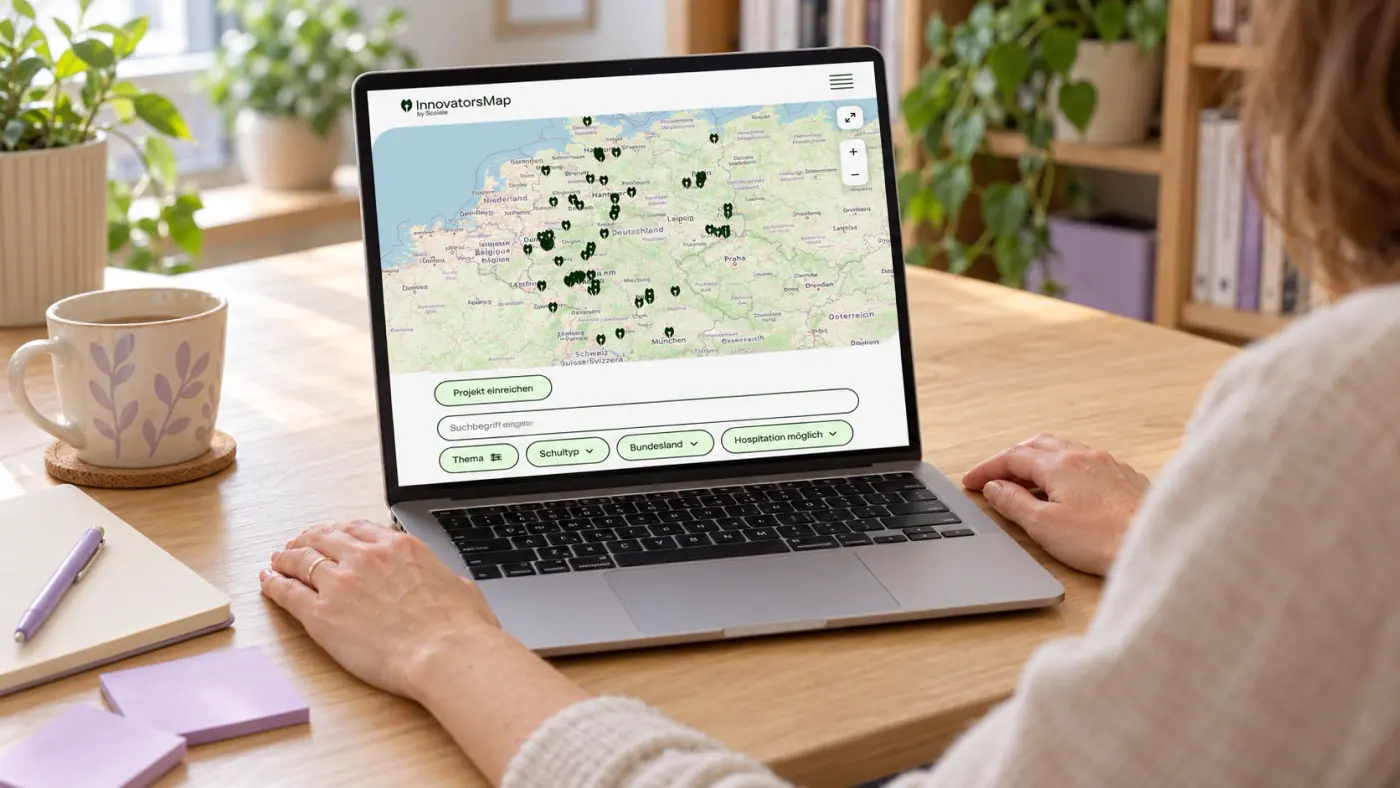
Learning together: School development and projects with Scolaia
A closer look at Scolaia’s InnovatorsMap, school visits, and AI prompt generator.
Sina Schriewer2 min read

Schools under pressure: Studies on workload and AI
Three studies explore the pressures schools face and how collaboration, clear processes, and AI may help reduce their workload.
Sina Schriewer6 min read

Needs compass: Finding solutions for your school
Clarify your needs before choosing a tool. Four questions help your school team identify which solution fits your everyday work.
Sina Schriewer5 min read